Scientific Research & Innovation

Driving lasting impact through science and the latest technology.

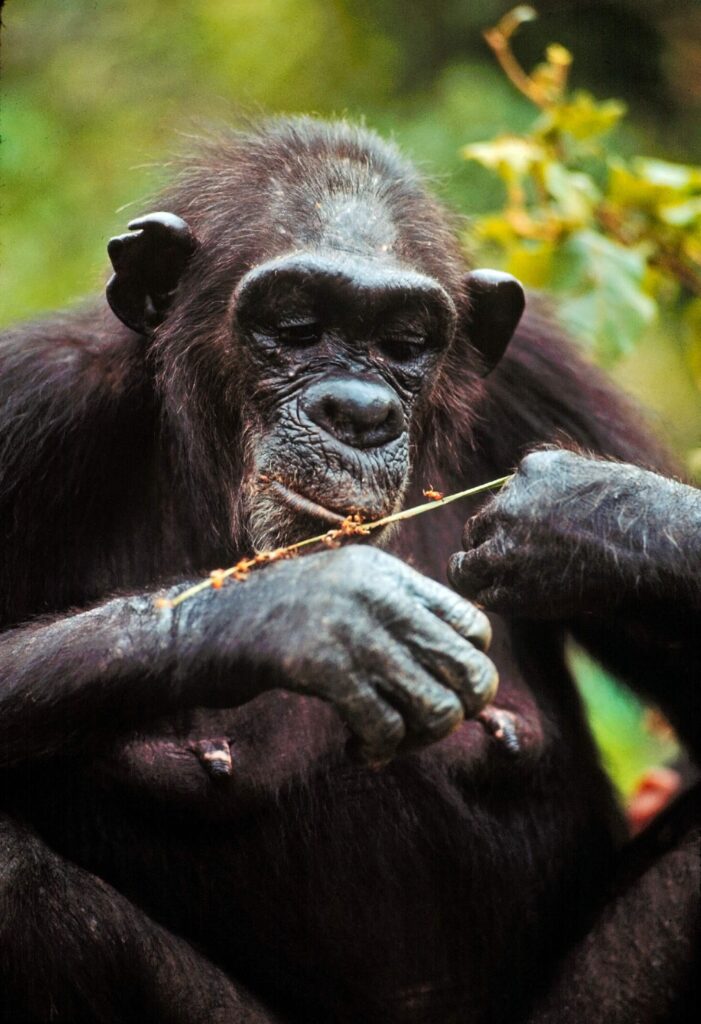
A photo of an adult chimpanzee eating termites off of a stick in the forest.

Science Is in Our DNA

It all began in 1960 when a 26-year-old Jane Goodall arrived in what is now Gombe, Tanzania to study wild chimpanzees. By embracing her natural curiosity, she created an innovative research approach that would shape modern animal behavior studies. What began with a young woman and a notebook soon evolved into what is now one of the world’s longest-running, technology-driven wildlife studies.

Today, scientific innovation is at the center of our work. The JGI science program integrates cutting-edge technology with community-led action throughout all of our initiatives to develop effective, scalable solutions for urgent conservation challenges.

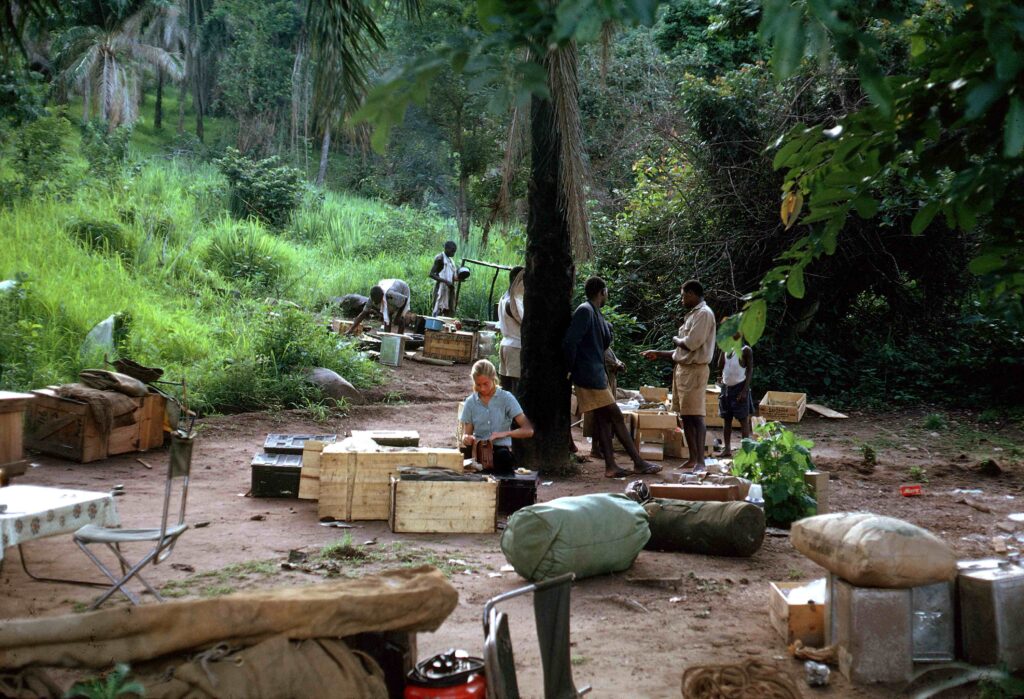
A photo of a campsite being set up in the middle of the forest.
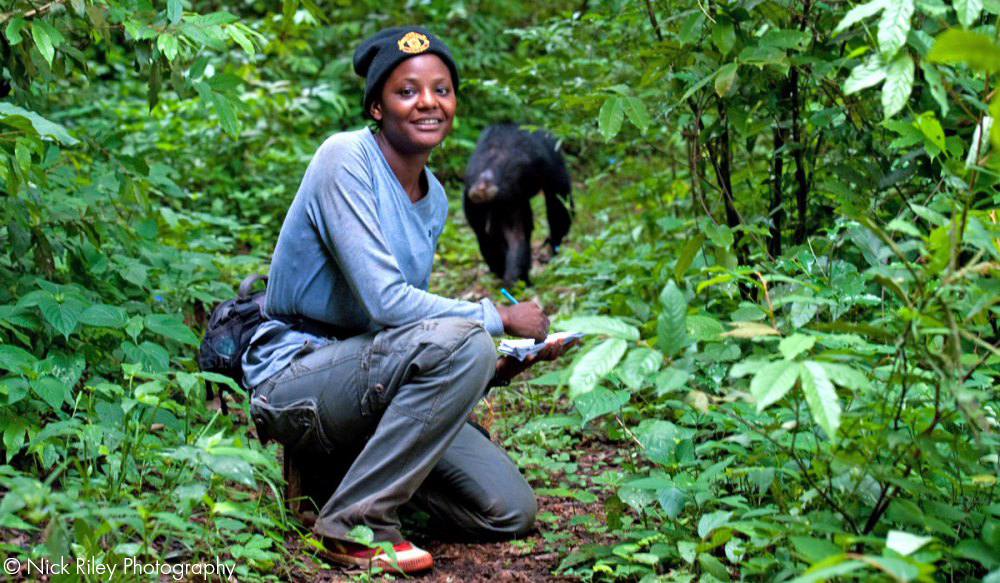
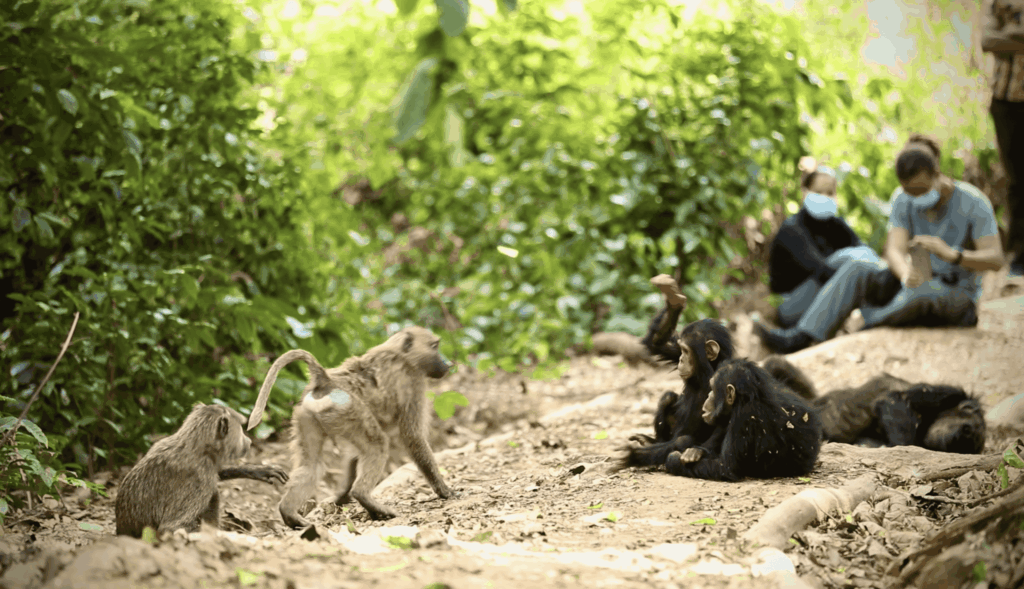
A photo of a young, feminine person with medium brown skin kneeling in the middle of the forest while a chimpanzee walks down the path behind her.

Prioritizing research and innovation to make a lasting impact

Leading the World’s Longest-Running Chimpanzee Field Research

JGI’s research continues the world’s longest-running study on wild chimpanzees, which Dr. Goodall began in Gombe in 1960. Today, our work at the Gombe Stream Research Center in Tanzania expands on the largest scientific knowledge base on chimpanzees and serves primatologists around the world. This research provides ever-new insight into the daily lives of chimpanzees and has developed a deep knowledge of the lives and behavior of over 200 chimps since Jane’s early work. This research plays a unique role in understanding our closest living relatives, providing essential information for the conservation of chimpanzees and contributing to a myriad of other scientific discoveries that benefit humans and chimpanzees alike.

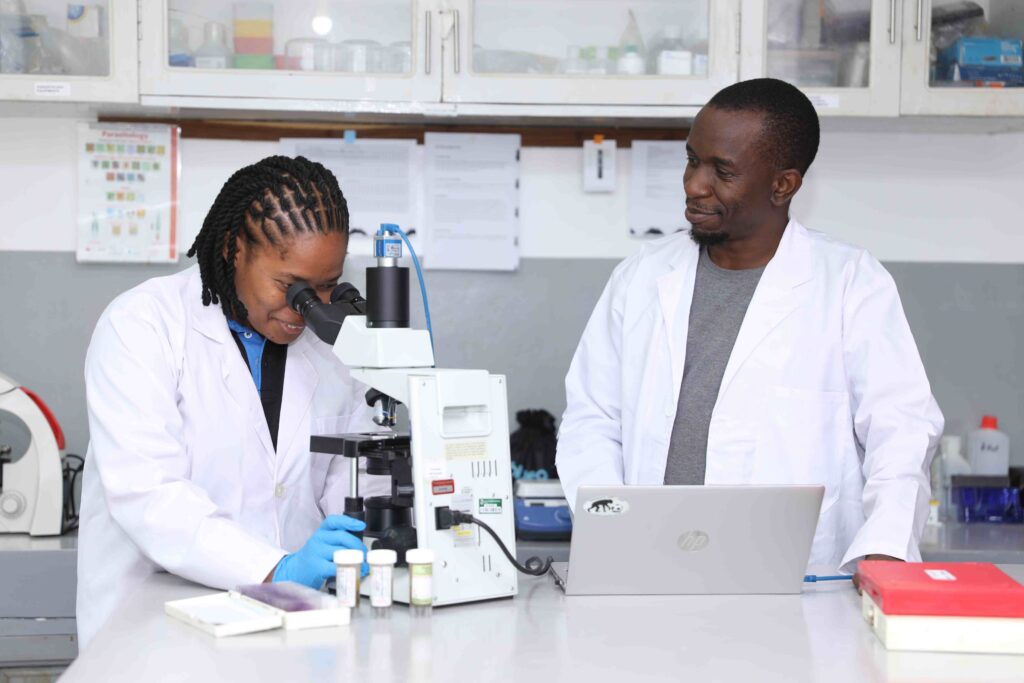
A photo of a young, feminine person with medium brown skin and black hair in braids standing in a lab and looking through a microscope as a middle-aged, masculine person with dark skin and short, curly, black hair watches.
Researchers Priscilla Shao and Dr. Dismas Mwacha at JGI's Gombe Stream Research Center One Health Lab.

New Insight Into Saving and Protecting Chimpanzees

At the Tchimpounga sanctuary in the Republic of the Congo, our research on chimpanzees in human care provides new insights into how chimpanzees orphaned by illegal hunting and trafficking can reclaim their lives and learn to live in healthy, functioning communities. We allow limited non-invasive chimpanzee research at Tchimpounga that contributes to advances in their care.


The more we learn about our closest living relatives, the better we can protect them from extinction — and the more we discover about ourselves and our place in the world.

“Only if we understand, will we care. Only if we care, will we help. Only if we help shall all be saved.”

— Dr. Jane Goodall, DBE, founder of the Jane Goodall Institute and UN Messenger of Peace
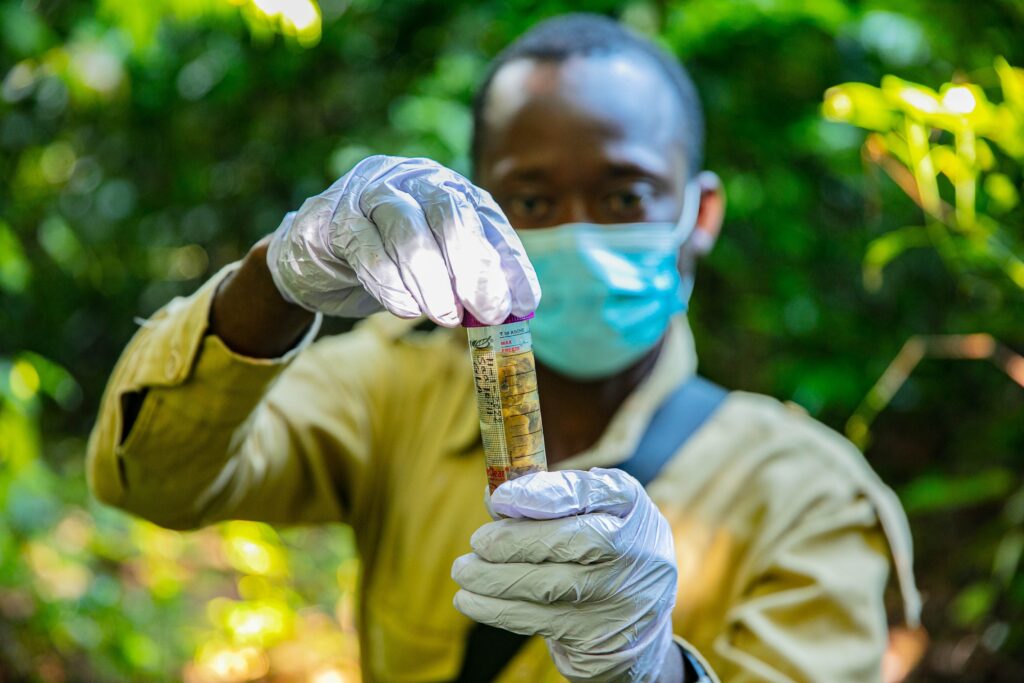
A photo of a young, masculine person with dark skin and short, curly, black hair standing in a forest and holding up a vial filled with a sample of chimpanzee scat.
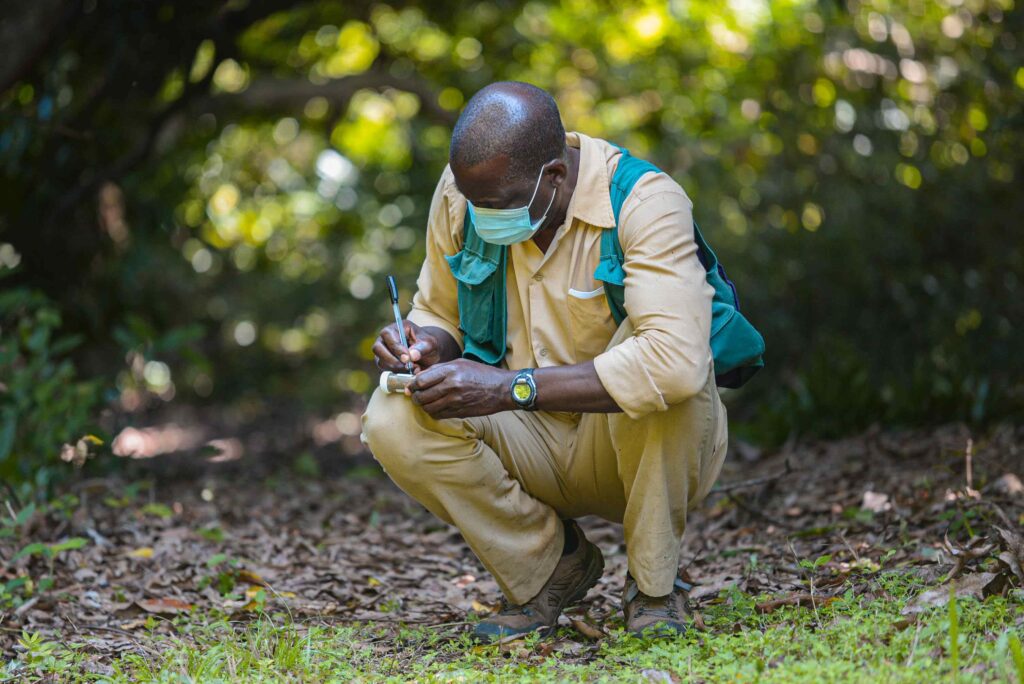
Field assistant Ashahadu Bitata collects chimpanzee fecal samples at Gombe National Park.

A Scientific Revolution in Local Conservation

True to the visionary work of our founder, JGI puts people at the center of conservation. We make innovative use of advanced science and technology to help local communities identify their needs and develop conservation action plans (CAPs) they can implement with success. Over the years, Dr. Goodall developed an ethic of scientific-based decision-making to make use of tools and protocols that raise the bar in conservation. These tools and practices provide the accurate, up-to-date information local communities need to create, monitor, and evaluate their own conservation action plans.


Every day, new uses of science and technology lead to conservation successes that were once impossible. Our Conservation Science team uses cutting-edge technologies, such as geospatial mapping, bioacoustics, and AI, to find the solutions that our on-the-ground practitioners need to conserve and protect critical habitat for chimpanzees and other wildlife.

Feature Story: Studying Hybrid Monkeys at Gombe

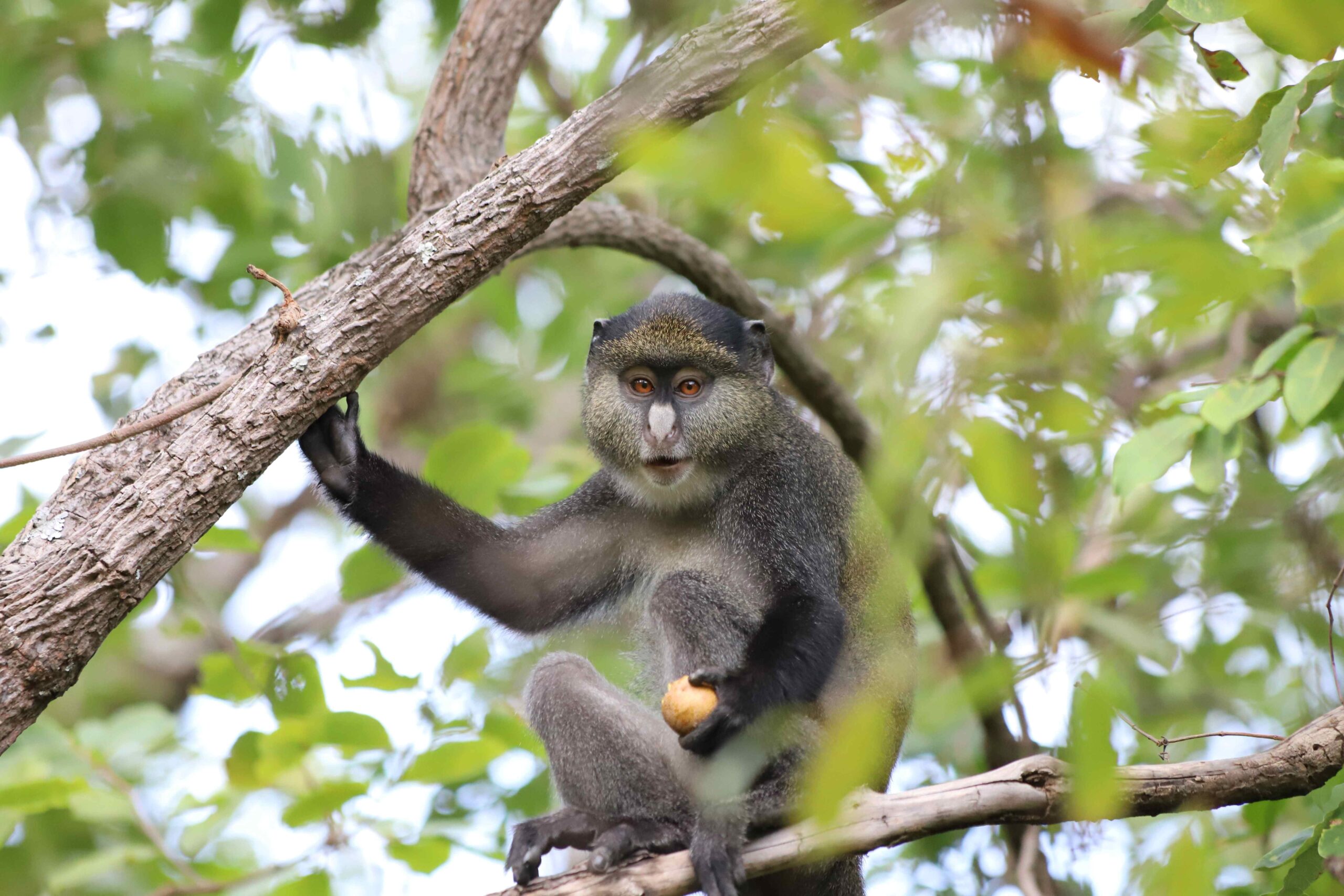
JGI’s Gombe Stream Research Center brings in researchers from around the world, from a variety of fields, and working on a variety of projects. One researcher, Dr. Kate Detwiler — associate professor of biological sciences at Florida Atlantic University — has been unlocking our understanding about rare hybrids between red-tailed monkeys and blue monkeys at Gombe.

Dr. Detwiler recalls with awe the moment when she finished running genetic tests on the samples she had collected: “What was so exciting and surprising was that all the blue monkeys in Gombe — they behave like blue monkeys, they give the alarm calls, they have the species-specific coloring in their hair, they have the body size. They are blue monkeys. But when I screened them for the mitochondrial marker for blue monkeys, every single blue monkey at Gombe had the red tail marker.

A photo of a hybrid guenon monkey sitting in the branch of a tree in the forest and eating a piece of fruit.

From these amazing genetic data, we now know that this hybridization is not new, but has been continuing for a long time; all the blue monkeys that we see today are descendants from hybridization events in the past. With researchers like Dr. Detwiler using the latest technology in Gombe, we are able to piece together a clearer picture of evolution’s journey.

Photo credits: Hugo van Lawick, Judy Goodall, Stephano Lihedule, Kate Detwiler, Nick Riley