
Monitoring and caring for the health of the planet we all call home, one ecosystem at a time.
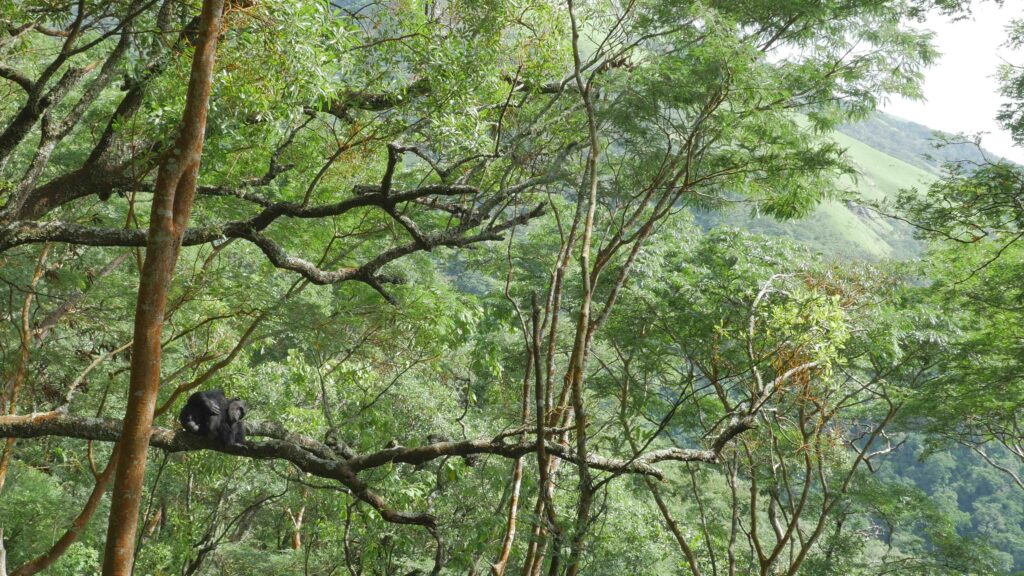
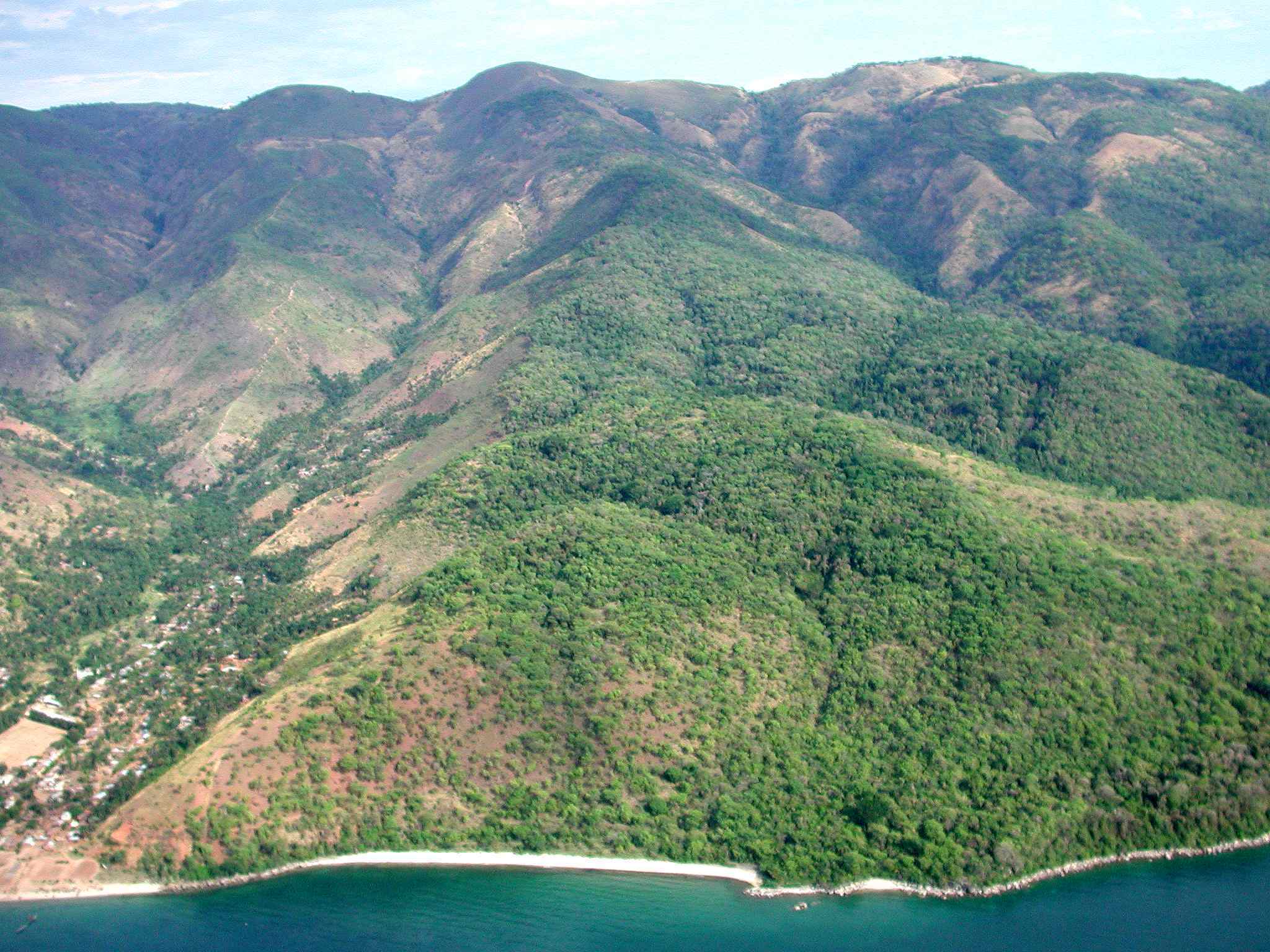
When she began her research, the area was part of a forest belt that stretched across equatorial Africa. But from the plane she saw only a small island of green forest — the park — surrounded by bare, treeless hills. She knew that the land was suffering, and it hurt everyone — humans and other animals. This essential habitat needed help.
Today, JGI carries Jane’s mission forward through community-led habitat management and an efficient decision support system that informs climate action for local and global impact.
When one part of that tapestry is removed, the whole thing unravels; it is our responsibility to protect our ecosystems for the sake of our shared planet.
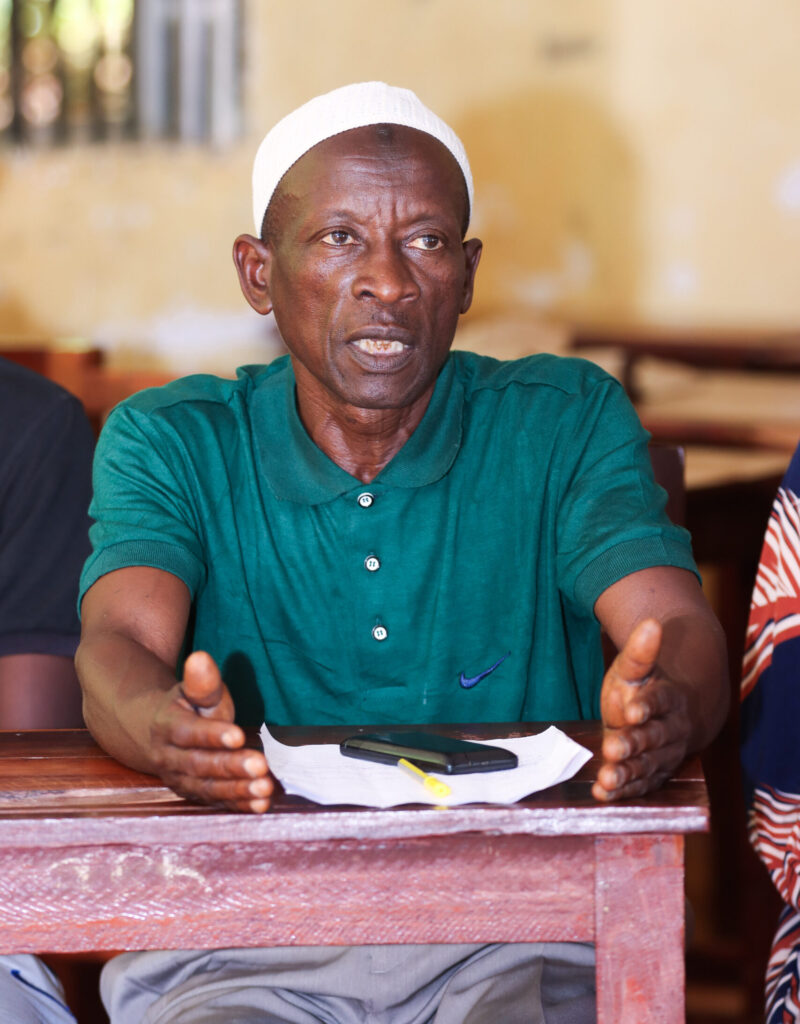
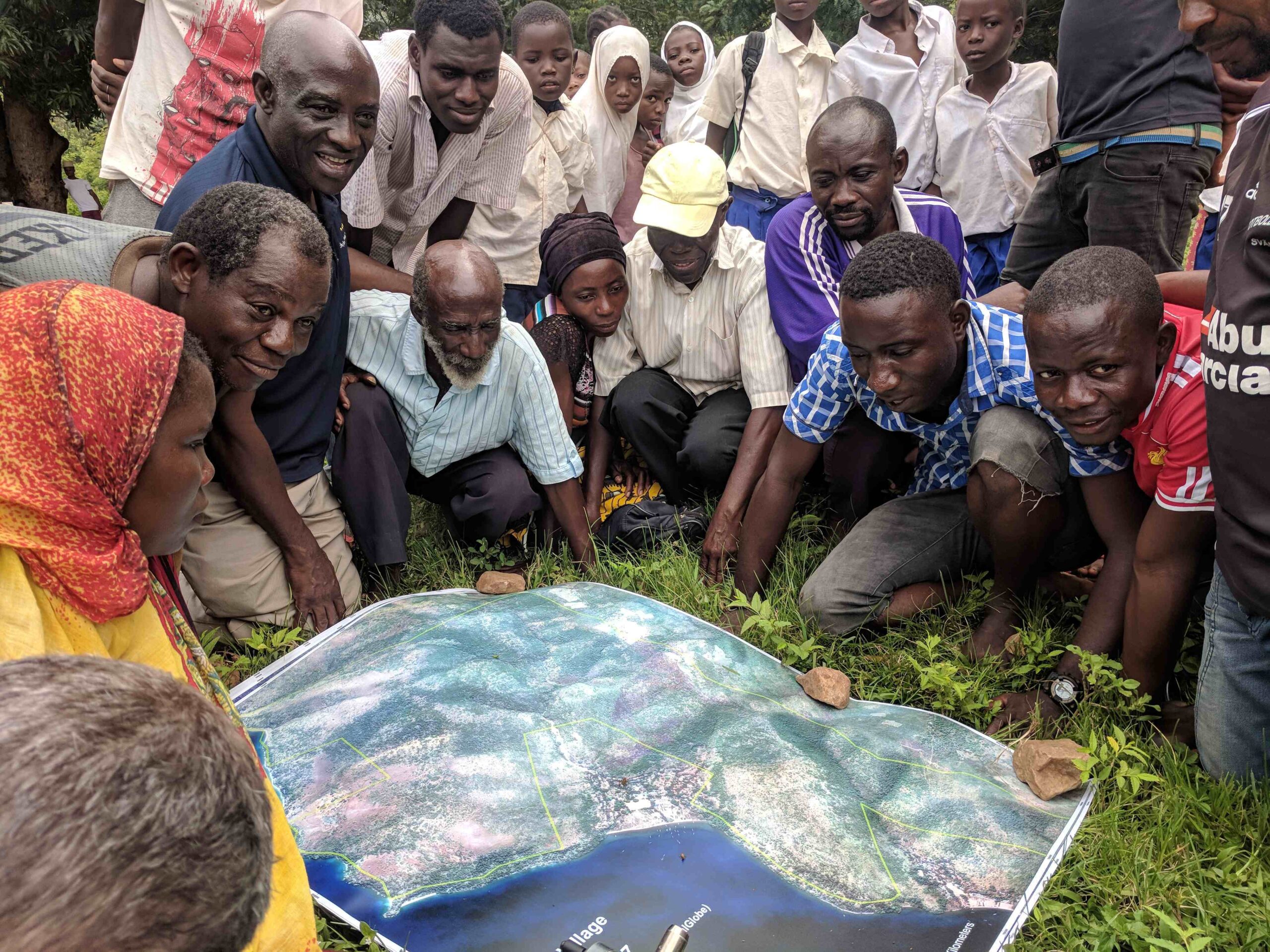
Twenty years ago, Hamis Mlondela was selected by his village government of Kagunga, Tanzania to patrol and protect the surrounding forests. Back then, he walked the rugged terrain alone, recording threats and his observations with pen and paper.
Today, thanks to the ongoing efforts of the Jane Goodall Institute, Hamis leads a team using cutting-edge mobile and satellite technology to monitor and protect the forests more effectively and efficiently.
“I remember starting in the Village Forest Monitor program in 2005,” Hamis told Dr. Lilian Pintea, JGI USA’s Vice President of Conservation Science, who first trained Hamis and 15 others to use GPS tools. “For years, I was the only one in my village doing this work. Now, I have a fellow forest monitor, and we’re part of the new Village Natural Resource Committee, learning new tools we can use to protect our forests.”
JGI’s support has transformed more than Hamis’ work. It has shaped his family’s future. His son is now studying ecotourism in Dodoma, inspired by his father’s commitment to conservation. Hamis himself recently purchased land where he plans to restore native trees.
Hamis now stands at the center of a growing movement — one built on local leadership, trust, and hope.
“[JGI] didn’t just help us protect our forests. You changed my life.” — Hamis Mlondela, Village Forest Monitor
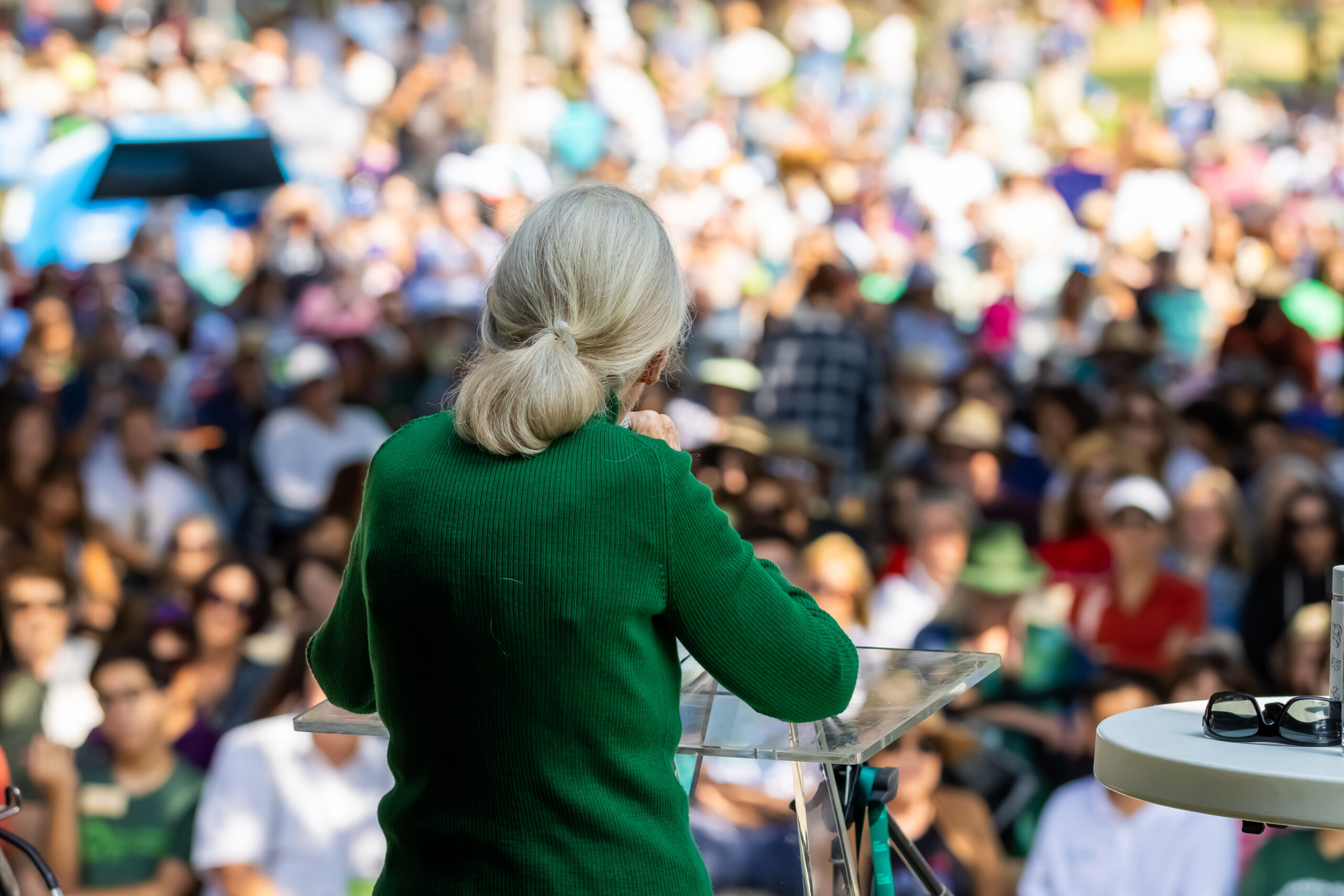
“I think more and more people know today the role that forests play in slowing down climate change by absorbing carbon dioxide from the atmosphere and storing it. And people are beginning to understand what we call the services provided by the forests; they give us clean air and water, they provide food and clothing, and so much else. They provide livelihoods to the hundreds of thousands of Indigenous people and others who depend on them for their very livelihoods.”
Dr. Jane Goodall, DBE
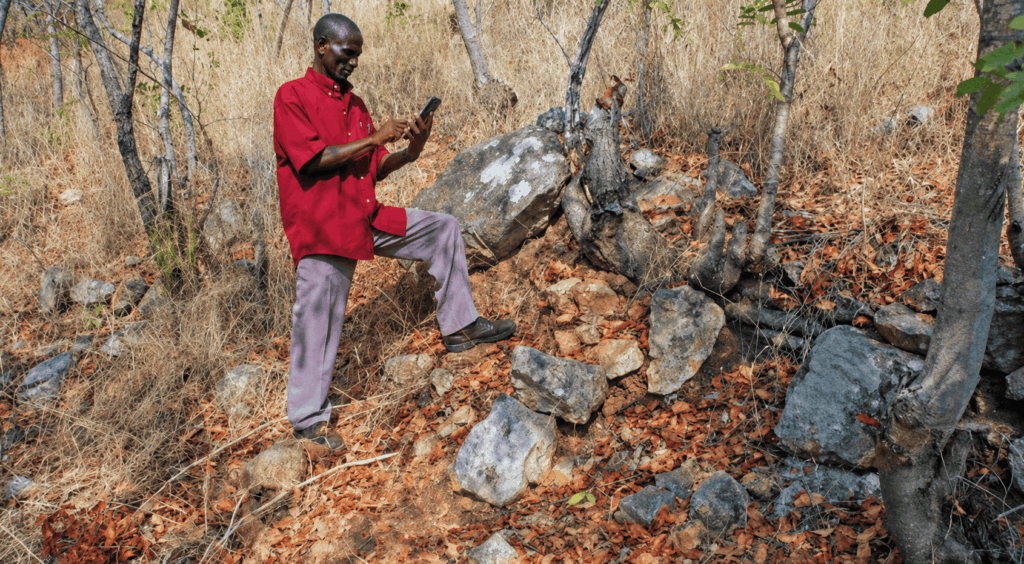
A forest monitor uses a tablet to record GPS coordinates and field data for a recently cut tree, supporting forest monitoring efforts, resource management, and conservation activities.
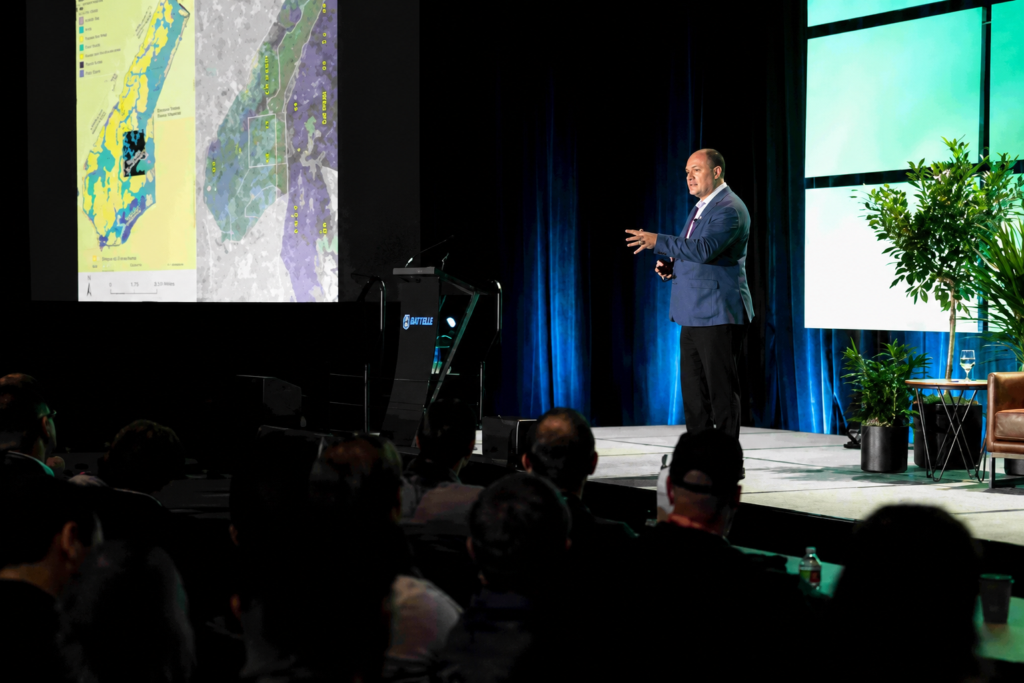
Dr. Lilian Pintea delivers a presentation at Geo Week 2026, sharing insights on the use of geospatial technologies, data-driven conservation, and innovative approaches to environmental monitoring.
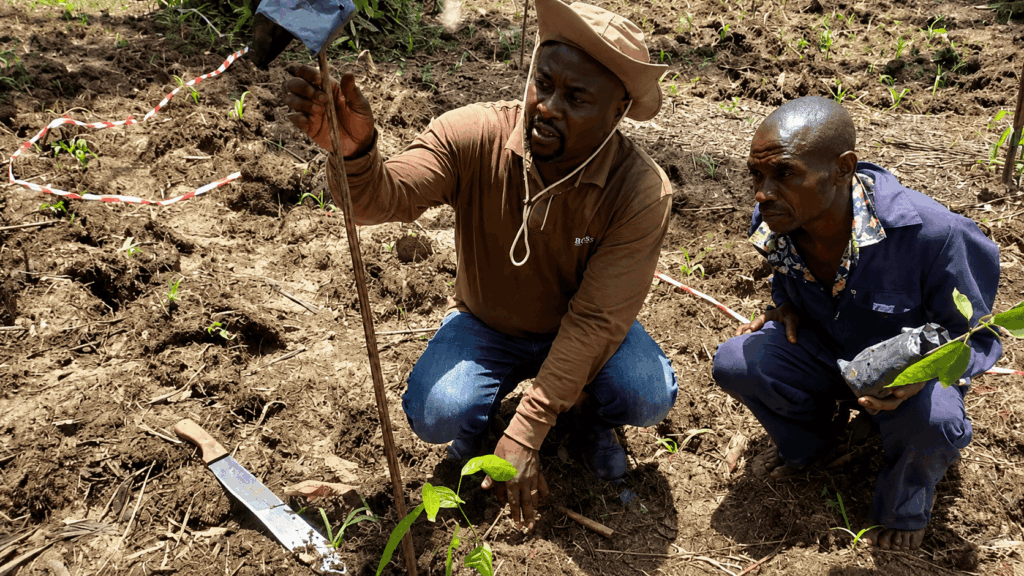
An agroforestry project site in Walikale, eastern Democratic Republic of the Congo, photographed in 2026. Agroforestry practices integrate trees with crops and other agricultural activities to support sustainable livelihoods, improve soil health, and enhance biodiversity.
Together, we're restoring essential ecosystems for all living things.
Photo credits: Stephano Lihedule, Hugo van Lawick, Nick Riley, Shawn Sweeney, Bill Wallauer, Morten Bjarnhof/GANT, Lilian Pintea, Geo Week, Eric Guzzetta
In the late 1980s, Jane flew over Gombe, the site of her wild chimpanzee study, in a small plane. She was deeply shocked.