
July 17, 2026
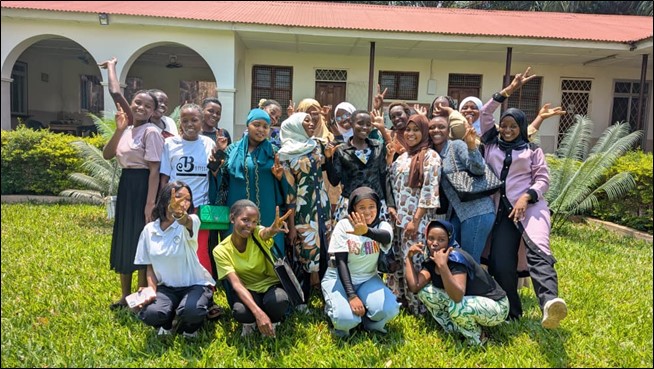
At the Jane Goodall Institute, conservation begins with people. For more than 30 years, JGI has worked alongside communities across Central Africa to address the challenges that affect both people and the environment. Education is a critical part of that word. When young people — especially young women — have the opportunity to stay in school and pursue higher education, the benefits extend far beyond the individual. Families become more resilient, communities are better positioned to thrive, and pressure on natural resources are reduced.
The stories below highlight three young women whose lives have been transformed through educational opportunities supported by JGI. Their experiences demonstrate how investing in education helps create stronger communities while advancing Jane’s vision of a future where people and nature can thrive together.
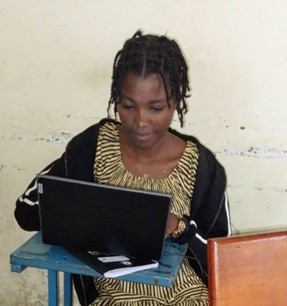
Kigoma, Tanzania | Tacare Girls Scholarship Program
For Akwilina, education has always represented opportunity. It was her path toward a better future for herself and her family. After completing Form Four (roughly equivalent to 10th grade in the United States), financial hardship forced her to put those aspirations on hold.
Akwilina, now 20 years old, comes from a low-income family in western Tanzania. After assistance her family had previously received came to an end, her parents relied on irregular, casual labor to cover basic household needs. While they were able to support one additional year of schooling after Form Four, the cost of tuition and supplies eventually became too great. Stepping away from school was a difficult setback.
“Without resources for school fees and learning materials, continuing my studies became impossible,” Akwilina shared. “Education represented my strongest path toward a better future for myself, my family, and my community.”
Everything changed when she learned about JGI’s Tacare Girls Scholarship Program. Encouraged by others, she applied for support and being awarded a scholarship marked a turning point.
“The support brought renewed hope and stability to my family and allowed me to return to school with confidence and purpose,” she said.
Today, Akwilina is continuing her education with the support of JGI as she pursues a degree in Information and Communication Technology at Kigoma Training College. She remains focused on her studies and is determined to make the most of the opportunity she has been given. She hopes to serve as a role model for other young women facing similar challenges, and one day, to use her education to give back to her family and community.
Akwilina’s story reflects the long-term impact of JGI’s Tacare Girls Scholarship Program. Since 1998, the program has helped high-achieving girls from under resourced communities in western Tanzania continue their education beyond primary and secondary school. Over the past 28 years, 367 girls have successfully completed their studies.
The scholarship program is part of JGI’s broader Tacare approach, a community-led conservation model that recognizes the connection between thriving communities and healthy ecosystems. Implemented in villages surrounding critical chimpanzee habitat in the Kigoma and Katavi regions, Tacare addresses challenges such as poverty, limited educational opportunities, and environmental degradation together rather than in isolation.
By investing in girls’ education, JGI is helping create stronger, more resilient communities, while supporting long-term conservation goals. Educated young women are more likely to pursue economic opportunities and invest in their families. In regions where people and wildlife share the landscape, these outcomes contribute to a more sustainable future for both local communities and the forests that chimpanzees depend on.
For Akwilina, the scholarship has done more than cover the cost of school. It has restored the possibility of achieving goals that once seemed out of reach and provided a foundation for the future she is working to build.
Kabale, Uganda | Girls Empowerment Program
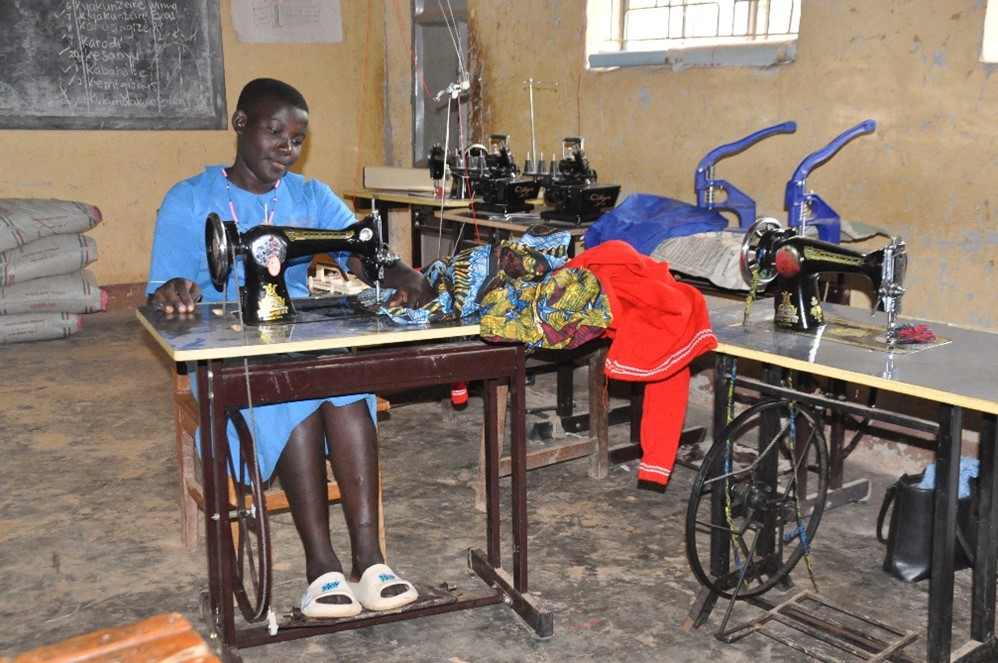
For more than six months after completing primary school (equivalent to elementary and middle school in the United States), Bridget’s future felt uncertain. She comes from a farming family in Kabale District and is one of seven children. In 2024, Bridget completed primary school and although she qualified to continue her education, she was unable to enroll in secondary school because her family could not afford the required school fees. Instead, Bridget spent her days helping with household chores and working in the fields.
“I was home for over six months,” Bridget recalls. “I didn’t have any hope of continuing my education. I was just digging and doing domestic work, without any hope of returning to school.”
Everything changed when a relative told Bridget’s family about a skills-training program supported by the Jane Goodall Institute. The program is offered through a local women’s group in Kafunjo Village and provided training in tailoring and knitting for girls and young women seeking new opportunities.
Bridget joined the group in September 2024 and quickly began developing practical skills. Today, she can sew dresses, shirts, trousers, school uniforms, sweaters, hats, scarves. And traditional African garments. More importantly, she now sees a path forward.
By selling the items she creates, Bridget hopes to earn enough income to continue her education and help her younger siblings remain in school.
“Attending the training and the ability to make different items has reenergized me and restored my hope of realizing my dreams and living a better life in the future,” Bridget says.
Bridget’s story reflects the broader impact of JGI’s Girls Empowerment Program, which helps girls overcome barriers that can prevent them from staying in school. JGI works with schools, teachers, students, families, and community groups to address some of the most common drivers of absenteeism and dropout among adolescent girls, including limited access to menstrual health education and products, financial hardship, and social pressures. Through opportunities like the tailoring program, JGI is equipping girls with the knowledge and confidence needed to pursue their education and future goals.
The Girls Empowerment Program operates in communities near critical chimpanzee habitat in western Uganda, where educational opportunities, economic resilience, and conservation are closely connected. By helping girls stay in school and build bright futures, JGI is strengthening communities while reducing pressures that can threaten forests and wildlife.
Since 2008, the program has supported more than 700 girls return to their education after dropping out. Teachers in participating schools report improved attendance, confidence, and classroom participation among girls, while female enrollment has increased by as much as 45%.
For Bridget, learning to sew has provided more than a new skill. It has restored her confidence and given her a realistic path toward continuing her education. Her experience demonstrates how investing in girls creates ripple effects that extend beyond individual lives, strengthening communities and supporting long-term conservation outcomes.
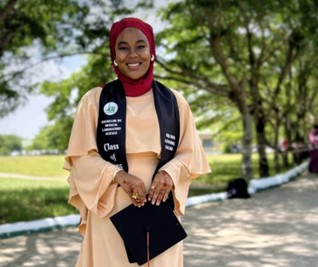
Zanzibar, Tanzania | Zanzibar Scholarship Program
For Iqlima, education has always been closely connected to service. As a student in Zanzibar, she found opportunities through Roots & Shoots to develop leadership skills while contributing to projects that improved her community and protected the environment.
“My passion for education, leadership, community service, and environmental responsibility began to grow when I was in secondary school,” Iqlima shared. “Through Roots & Shoots, we participated in projects focused on the environment, community, and animals, including mangrove conservation, beach cleanups across Zanzibar, and school improvement projects.”
Those early experiences helped shape both her academic ambitions and her commitment to making a difference. Through JGI’s Zanzibar Scholarship Program, JGI helped remove financial barriers that could have interrupted her education, allowing her to focus on her studies and pursue a degree in healthcare.
Iqlima recently graduated from Kampala International University in Tanzania with a bachelor’s degree in medical laboratory sciences and earned an exceptional 4.0 GPA. She is currently completing an internship at Muhimbili National Hospital-Upanga, where she is gaining hands-on experience in medical laboratory services and preparing for a career in healthcare.
“I am deeply thankful for JGI’s belief in me and for giving me the opportunity to build a future in the healthcare field”, she said. “Your support has inspired me to work with integrity, serve my community with dedication, and one day give back by supporting others the way you supported me.”
Iqlima’s story demonstrates how JGI’s programs help young people turn their potential into meaningful careers. Through Roots & Shoots, she developed a sense of responsibility to her community and the environment. Through the Zanzibar Scholarship Program, she gained access to higher education and the support needed to achieve academic success.
Since its launch in 2019, the Zanzibar Scholarship Program has supported 33 students from underserved communities across Zanzibar in pursuing higher education. This program helps promising young people access opportunities that might otherwise be out of reach while encouraging continued engagement in service and environmental stewardship.
Today, Iqlima is building a career dedicated to improving health outcomes in her community. Her success reflects the broader impact of JGI’s Zanzibar Scholarship Program, helping young people gain the education and experience needed to build meaningful careers and contribute to their communities.
The stories of Akwilina, Bridget, and Iqlima illustrate the far-reaching impact of investing in young people. Each accomplishment reflects the determination of these young women as well as the impact of investing in their potential. Their achievements challenge barriers that have historically limited opportunities for women and create new possibilities for the next generation of girls who follow in their footsteps.
Across the landscapes where JGI works, educated women play an important role in strengthening communities, improving household well-being, and shaping decisions that affect local natural resources. When girls have the opportunity to learn and build meaningful careers, the benefits extend far beyond the individual.
Photo credits: JGI Tanzania


The Jane Goodall Institute is deeply saddened by the passing of our longtime friend, supporter, and leader, Donald…
How do you create conservation campaigns that have lasting impacts? You can explain why protecting the environment is…
On June 8, 2026, the National Environment Management Authority (NEMA) in collaboration with the Jane Goodall Institute, Bunyoro Kitara…