
July 1, 2021 By Ashley Sullivan
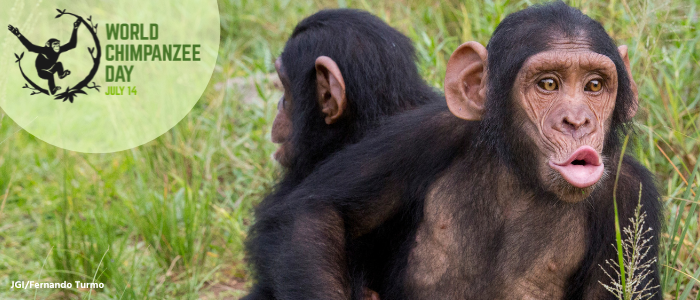
Chimpanzees are our closest living relatives in the animal kingdom…but you may already know that! What you may not know is that they are incredibly unique, dynamic, and that we learn more from them every single day. Every year on July 14th, we celebrate our great ape cousins by honoring all the ways that they are innately valuable, essential to ecosystems, and deserve our respect. This year, Dr. Jane Goodall and the Jane Goodall Institute global chapters are sending out a Pant-Hoot (chimpanzee calling) to celebrate chimpanzees and use our voices to stand up for our closest living relatives!
World Chimpanzee Day unites people all around the world in celebrating the incredible wonder and importance of chimpanzees. The day honors the anniversary of when 26-year-old Jane Goodall first stepped foot onto the shores of Lake Tanganyika in Gombe, Tanzania in 1960 to study these mysterious and incredible beings. Jane’s insights that chimpanzees make and use tools, are compassionate, have dynamic personalities and intelligence, and deserve our respect transformed the scientific landscape, forever redefining our relationship to other animals.
As Jane has shared, “we are not different in kind, but rather by mere degree.” This research in Gombe, Tanzania, continued today through the Jane Goodall Institute, is the longest running wild chimpanzee study in the world – 60 years and going. For over half a century, this work has provided tremendous insights in the fields of ecology, animal behavior, health, and so much more.

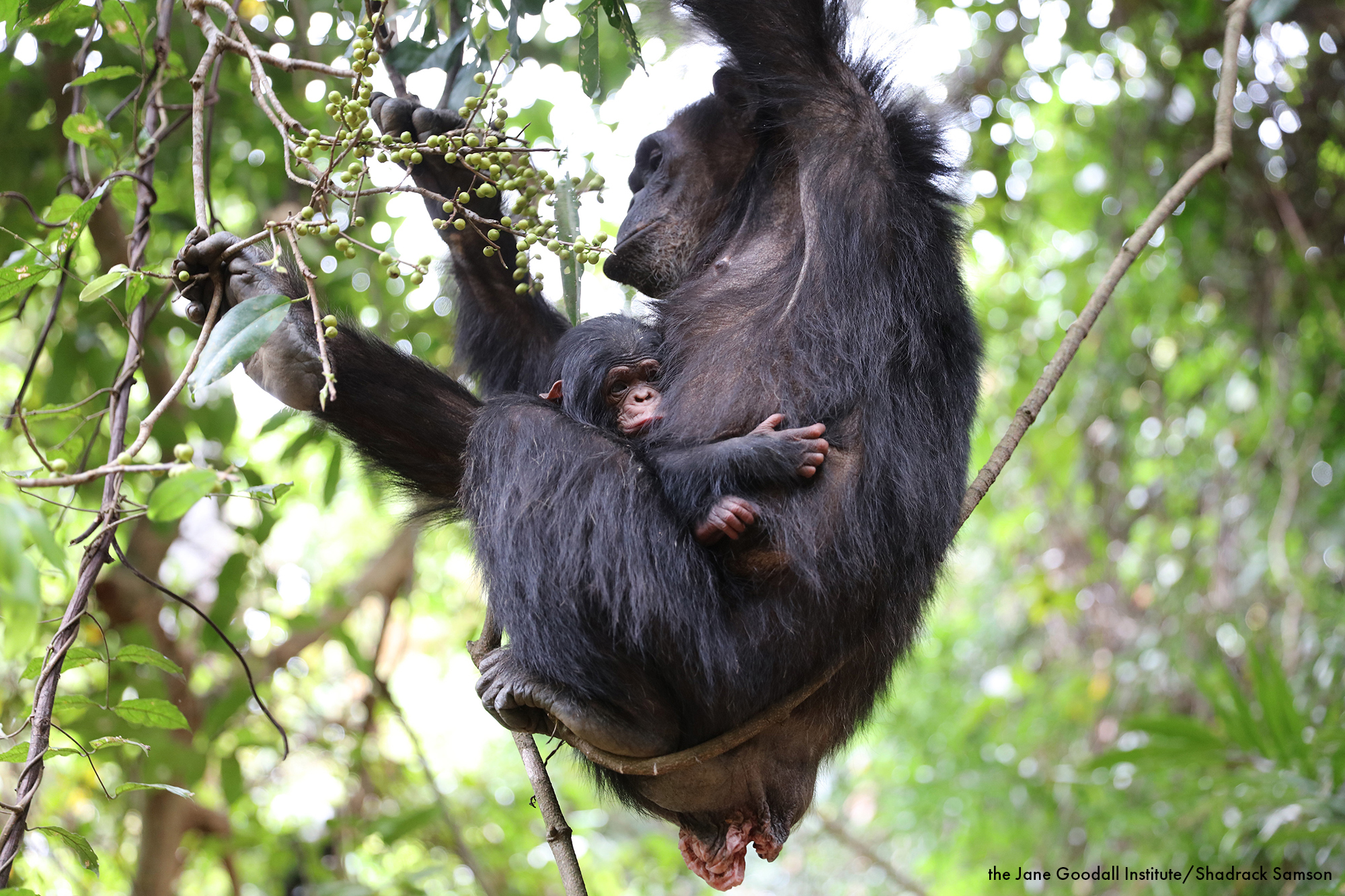
For World Chimpanzee Day 2021, we celebrate all the fascinating ways chimpanzees are so like us, and yet so unique! From their ability to form complex relationships and bonds to their extraordinary use of communication, from their essential role in rainforests as seed dispersers to their individual personalities and stories – chimpanzees are truly one-of-a-kind. As we celebrate all the ways in which they are extraordinary animals and our closest cousins in the animal kingdom, we also look for ways to encourage their conservation and improved welfare worldwide. Through collaborations between individuals, NGOs, governments, and corporations, we can grow understanding, compassion, and improved wellbeing for chimpanzees.
Chimpanzees are Unique
Chimpanzees are Important
Chimpanzees are the most Similar to humans

Unfortunately, Chimpanzees are endangered on the IUCN’s Red List. At the turn of the 20th century, there were an estimated 1-2 million chimpanzees across 25 countries in Equatorial Africa. Current estimates suggest there are now around 340,000 (high estimate) chimpanzees remaining in only 21 African countries. They suffer due to threats like habitat loss, disease, fragmented populations, and illegal wildlife trafficking. In captivity, many sadly remain in biomedical research facilities around the world, and are kept as illegal pets, in roadside attractions and unaccredited zoos. Together we must work to stop these threats, improve their well-being in captive environments, and save chimpanzees!
There are so many ways to #GiveaPantHoot for chimpanzees!
Pant-Hoot with us for WCD!
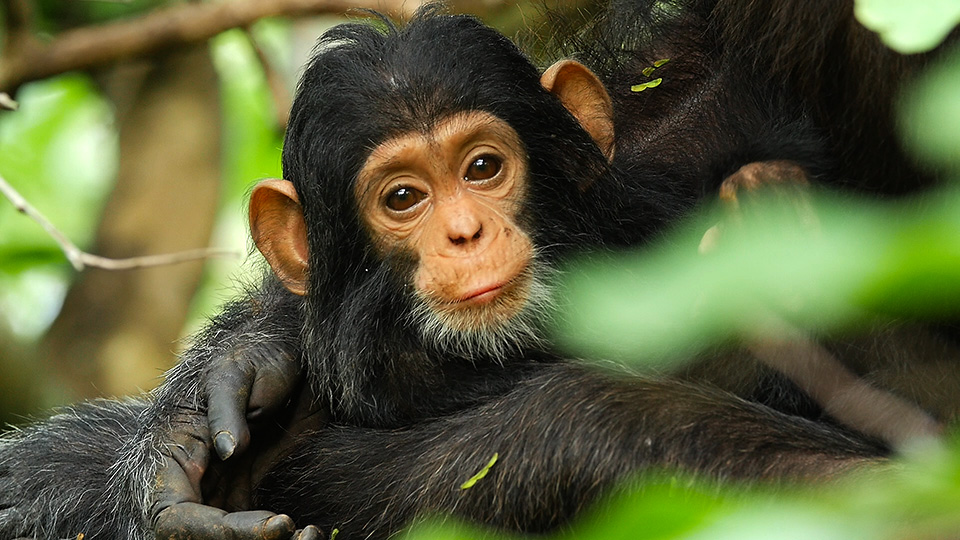
Chimpanzees greet one another using a vocalization known as a “Pant-Hoot,” something Dr. Goodall does at every one of her lectures. Record your best Pant-Hoot and post to social media tagging #WorldChimpanzeeDay @janegoodallinst ahead of July 14th for a chance to be featured on the day!
The Jane Goodall Institute is a global community conservation organization that advances the vision and work of Dr. Jane Goodall. By protecting chimpanzees and inspiring people to conserve the natural world we all share, we improve the lives of people, animals and the environment. Everything is connected—everyone can make a difference.





The Jane Goodall Institute is deeply saddened by the passing of our longtime friend, supporter, and leader, Donald…
How do you create conservation campaigns that have lasting impacts? You can explain why protecting the environment is…
On June 8, 2026, the National Environment Management Authority (NEMA) in collaboration with the Jane Goodall Institute, Bunyoro Kitara…