
November 20, 2026 By Kira Leinwand
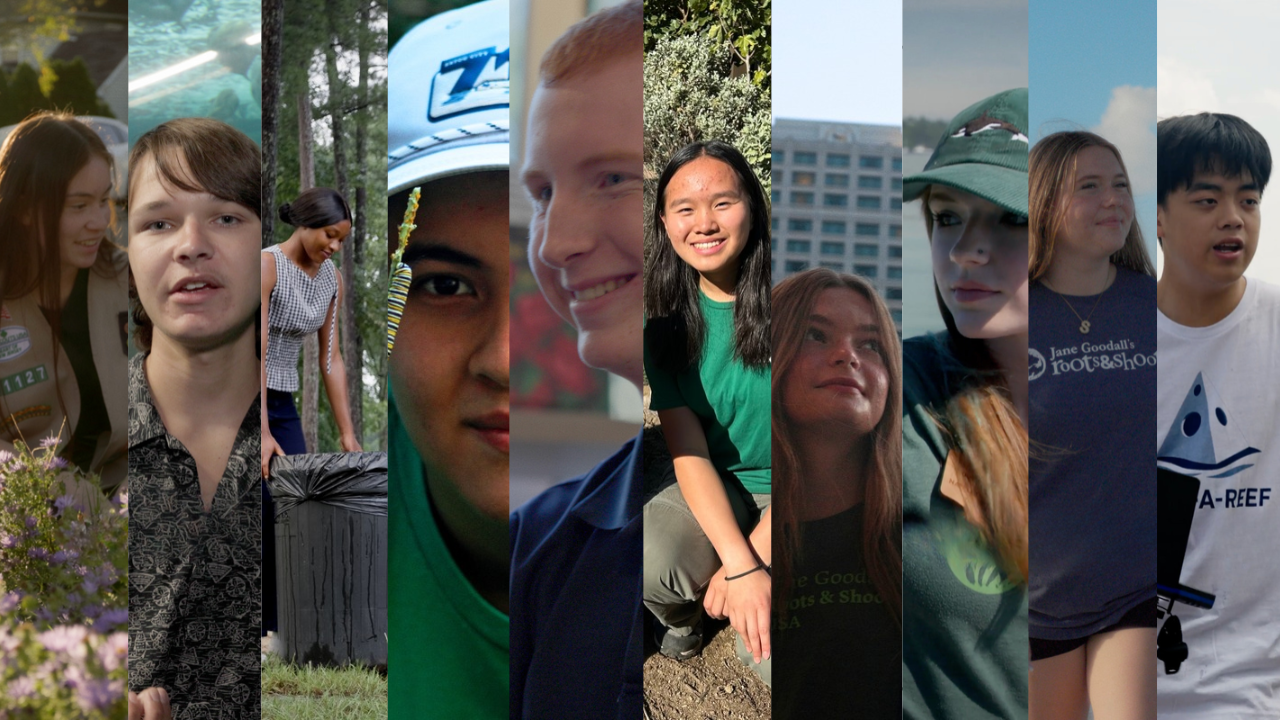
What would you do if you became a non-human animal for a day? In Disney and Pixar’s movie, Hoppers, 19-year old Mabel’s journey into the animatronic body of a beaver allows her to understand her local wildlife and what it takes to protect their habitat. Members of 🔗 Jane Goodall’s Roots & Shoots may not have the technology to become their favorite animals (yet), but they’re still “hopping in” to support their wild neighbors!
In celebration of 35 years of Roots & Shoots, 30 years of the Disney Conservation Fund, and the Hoppers release, we launched the 🔗 “Hop into the Animal Kingdom Challenge” in partnership with the Disney Conservation Fund. From dozens of submissions, our team selected 🔗 ten young changemakers from across the US who are helping animals and habitats in a big way! Challenge winners received funding to expand their projects and celebrated with a conservation summit at Walt Disney World Resort.
The power of young people was one of Dr. Jane Goodall’s greatest reasons for hope; check out the inspiring projects below to see exactly why.
Pollinators, like bees, birds, and bats play an essential role in the production of many of the fruits and vegetables we eat, but their natural habitats are often destroyed to make way for buildings and other human-centered features. Angela noticed in her own community that many areas lacked green spaces and the insects that enjoy them, so she decided to do something about it.
As the leader of the PolliNATORS Project, Angela turns spaces into flourishing gardens of native wildlife! Angela began in Westfield at her local Girl Scouts headquarters as part of her Gold Award and continues to expand her impact, planting five prairie lots at her local municipal building.
Together with her friends, Angela plants gardens in visible spots where both wildlife and people can enjoy them. Angela is inspiring others to make a difference for pollinators in their own communities.
When you think of sharks, what do you picture? Cash knows many people fear sharks, and he wants to remind them that these animals are worth saving.
Sharks face many human threats today, including overfishing, plastic pollution, and the shark fin trade. As apex predators, the health of shark populations affects their marine ecosystem and impacts everything from tourism to seafood. Fueled by his deep love for sharks and the support of Jane Goodall’s Roots & Shoots, Cash is working to save these animals even from the landlocked state of Tennessee!
He has written a book, “Shark Defender,” about getting kids involved in shark conservation. He regularly gives presentations at schools and education events about the importance of sharks. He even writes letters to and meets with policymakers, ensuring they have the information needed to take a stand for sharks. Because Cash started taking action at such a young age, he’s now built up a movement of people caring for sharks across the US.
Destiny’s activism journey was a walk in the park! Well, at least it started that way, with a literal walk in the park. When she came upon a duck that had gotten itself wrapped up in discarded plastic, she saw the very real effects of littering on local wildlife. She decided to do something about it.
Destiny began cleaning up her community, one action at a time! Her Roots & Shoots project first started with picking up litter she saw on her walks, a simple action most of us can make time for. When she noticed that there were no trash cans in a designated seating area, she personally moved three trashcans to that area to encourage proper waste disposal.
Then she took it a few steps further. She took photos of what she observed and reached out to her mayor with her findings. She connected directly with the park director to better understand trash overflow, waste pickup schedules, and other systems issues. Through her persistence and with support from Roots & Shoots, she was able to officially add permanent trash cans to this high-traffic area of the park. Through her efforts, Destiny has made her local park safer for wildlife and cleaner for the people who are proud to call this their community.
Ethan’s passion for conservation work started with visits to the Houston Zoo as a kid, which grew into a role in its Zoo Crew Explorers program. The more he learned, the more inspired he felt to care for not only wild species around the world, but the wildlife right in his hometown. Take the Attwater’s prairie chicken, a subspecies found only in Ethan’s hometown of Katy. When Ethan learned how endangered this bird was, he knew he had to help — and that he couldn’t do it alone.
Ethan identified an open area on his school’s campus that could provide the perfect, hands-on opportunity for his fellow students to plant native plants and learn firsthand about what it takes to restore a prairie habitat. Thanks to his relationship with the Houston Zoo, which has an Attwater’s prairie chicken breed and release program, Ethan was able to secure all of the native plants needed for this project. When the prairie chickens come back, Ethan’s restored prairie habitats will be a welcome sight.
By involving his fellow students in his prairie restoration project, Ethan is not only improving habitat for an endangered species, but getting more young people excited about conserving their local wildlife! When we feel connected to the land around us, we can’t help but want to protect it.
Growing up, Jack’s favorite part of visiting the Memphis Zoo was seeing the orangutan habitat. As a redhead, he felt an immediate kinship with their distinct orange fur. So, when he learned about the damage that unsustainable palm oil was doing to orangutan habitat out in the wild, he was motivated to take action.
It started with three letters to companies, telling them that their use of palm oil was causing orangutans to be critically endangered. But with over 50% of grocery store foods and cosmetics using palm oil, there was more to be done. Jack began creating informational videos, giving presentations in schools, and raising funds to restore habitat and protect orangutans, all under a new name: Kid Conservationist.
To this day, Jack has raised $45,000+ for animal rehabilitation, reforestation, and education. Through never-ending advocacy and action, he’s holding out a helping hand to his “fellow red-headed apes.”
Growing up in a family that loved to hike, Katelyn was regularly surrounded by nature. When her high school biology teacher introduced the class to a species identification app called iNaturalist, it changed the way she looked at this world she’d spent so much time in. Katelyn valued the chance to learn what plants and animals she passed by every day. When she realized that other kids didn’t have access to these formative experiences, she began a mission to change that.
Through her Roots & Shoots project, Katelyn connects with youth groups and teaches them how to use iNaturalist and other science apps. Together, they go on community BioBlitzes to better understand the wildlife and plants in their own habitats!
Knowing that nature affects everyone, Katelyn strongly believes that everyone needs equal access to resources that help them better understand and protect the natural world. Thanks to her, many other young minds are following in her footsteps and becoming scientists in their own right.
13 different bat species live in the “Windy City” of Chicago, and yet Illinois is one of the few states that doesn’t allow for bat rehabilitation. While bats offer so many benefits, including insect control and plant pollination, so many people live in fear of them. Thankfully, bats have Marlee on their side!
Through Marlee’s Roots & Shoots project, Wingin’ It, she’s helping both bats and birds in urban areas. She approaches their protection in a few different ways: recording local bat calls using an echo monitor so that we can better understand local populations; building and setting up bat houses in parks and other green areas, where bats can safely roost; and speaking at community events about the importance of bats for local pollination and pest control.
Through Marlee’s work, she’s changing local perceptions on these “unlovable” species and restoring balance to Chicago’s ecosystem.
Orcas form close family bonds, just like humans. This fact made Nateli feel more connected to the southern resident orcas that are native to her home state. When Nateli learned that southern resident orcas are endangered because pollutants threaten one of their primary food sources, salmon, she began speaking up and taking action.
Nateli launched a Roots & Shoots project called “Plan ORCA.” Through this project, she speaks at local schools, organizes restoration events for salmon habitat and beaches, tests the quality of nearby bodies of water, and uses her findings to write letters to politicians advising policy changes.
Through her unceasing dedication, Nateli is restoring hope for the southern resident orcas of the Pacific Northwest and inspiring a whole community of new orca fans to care about these magnificent beings as much as she does.
Shea has always loved sea turtles, but many sea turtles end up injured in the wild due to human conservation threats. When this happens, they often must be rehabilitated in specialized facilities. Shea found that kids undergoing treatment for cancer could relate to their stories of recovery, and this connection inspired Shea to found the S.H.E.A. Project, which stands for Sea Turtles, Healing, Empowerment, and Awareness.
Through this project, Shea hosts sea-turtle themed workshops — a fun, educational break for both kids undergoing treatment and their siblings. Shea also puts together Shell Buddy Boxes for the kids to take home, which include plushies, coloring sheets, fidget toys, and more. In fact, Shea just made 100 Shell Buddy Boxes for the Children’s Cancer Center in Florida!
By taking the time for this impactful work, Shea is helping kids who spend a lot of time indoors to connect to the natural world and to build hope about sea turtles’ and their own recovery.
William organizes events in areas like Mamaroneck Harbor, which used to be full of rocky oyster reefs that supplied food and habitat for a variety of marine wildlife. But when people dredged out a lot of the rock formations, these animals had nothing to latch onto.
Through his project “Build-A-Reef,” William and his Roots & Shoots group place 3D-printed artificial reefs into the water, made specifically to allow oysters and other creatures to attach easily and build up habitat. Taking it a step further, William’s AI-smart artificial reefs also include sensors and cameras to capture data that is remotely sent to marine scientists around the world!
William also organizes catch-and-release fishing events around these reef releases to help connect young people to nature and share the importance of these ecosystems. Through this outreach, he’s preparing a new generation of conservationists to help take care of their harbor.
Our ten challenge winners certainly have a lot to be proud of, which is exactly why — thanks to funding from Disney Conservation Fund — we celebrated their work at a youth summit at Walt Disney World Resort! At Disney’s Animal Kingdom and EPCOT, they learned from Disney’s animal care, veterinary, science, conservation, and storytelling experts, and learned many ways that they could take their passions into careers in conservation. Most importantly, they were able to connect to the other winners, compare stories and challenges, share dreams, and brainstorm their next steps. These are the kinds of friendships that last a lifetime.
In Hoppers, Mabel learns three core “Pond Rules” for living in her new home; Pond Rule #3 is “We’re all in this together,” a reminder to look out for others no matter their species. It brings to mind Jane’s message that we are all connected in what she called the “Tapestry of Life.” From persistent advocacy to advanced technology, for everything from oysters to orangutans, these ten individuals are perfect examples of Pond Rule #3 in action. And now, they each know nine other young activists who are working hard to make a difference for animals, just like them.


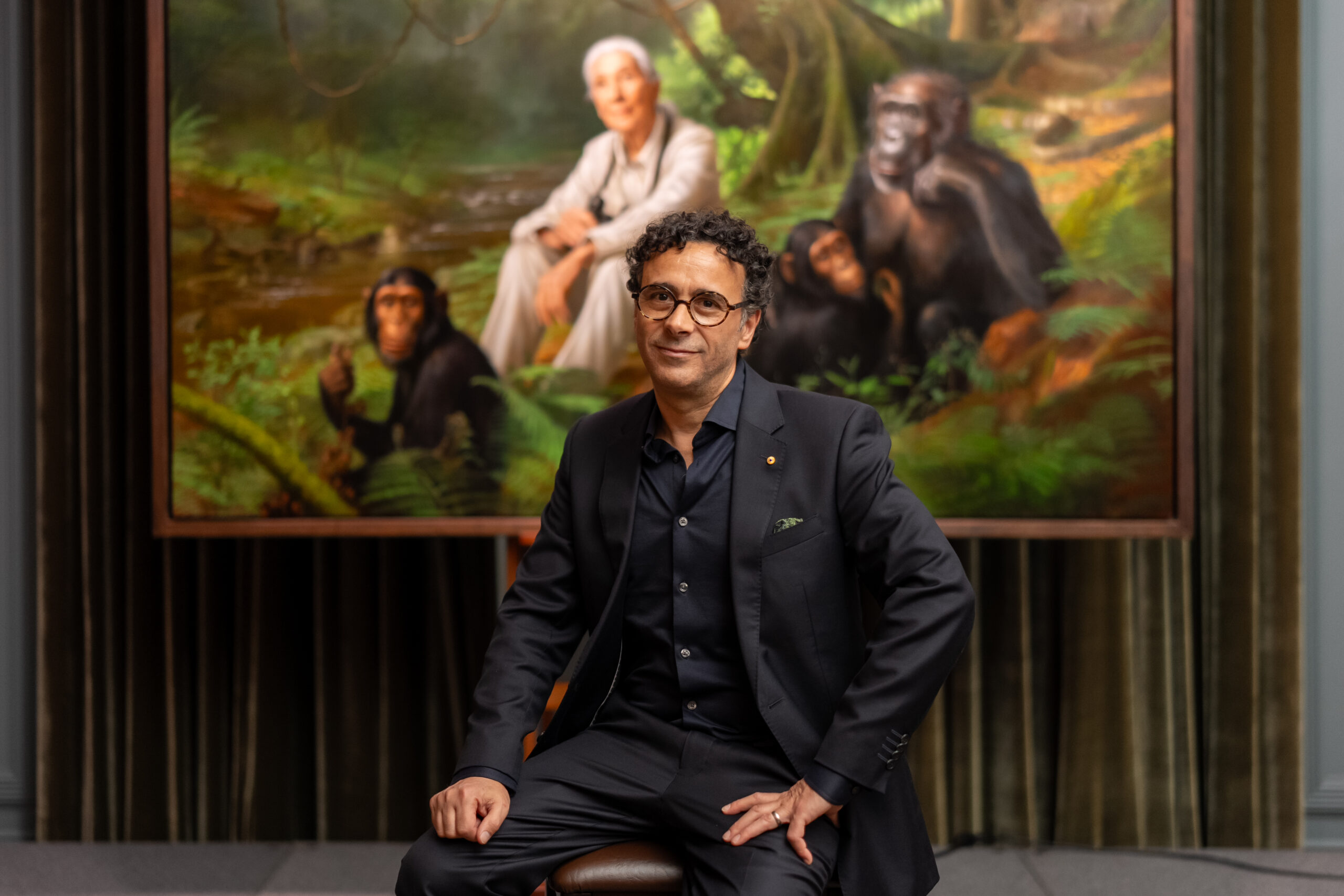
Dr. Jane Goodall’s vision lives on in so many ways: the work that the Jane Goodall Institute continues…
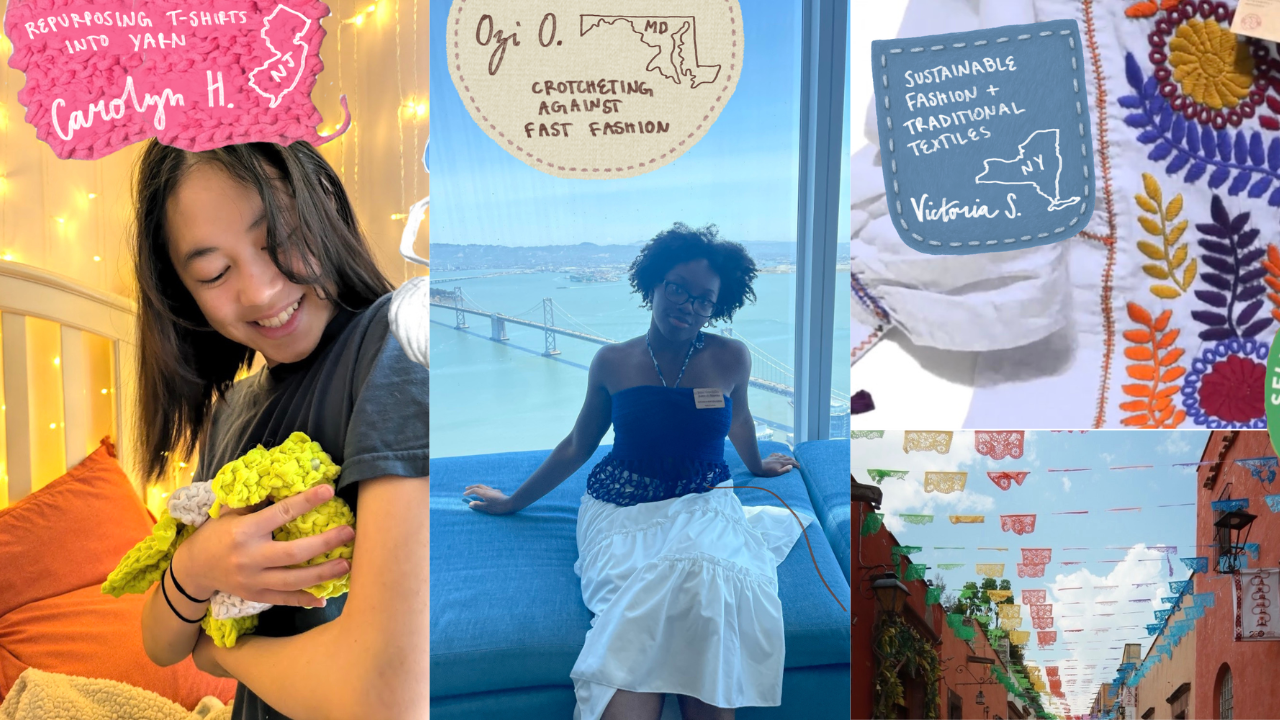
Fashion is often treated as fleeting — trends that come and go, garments worn a handful of times…
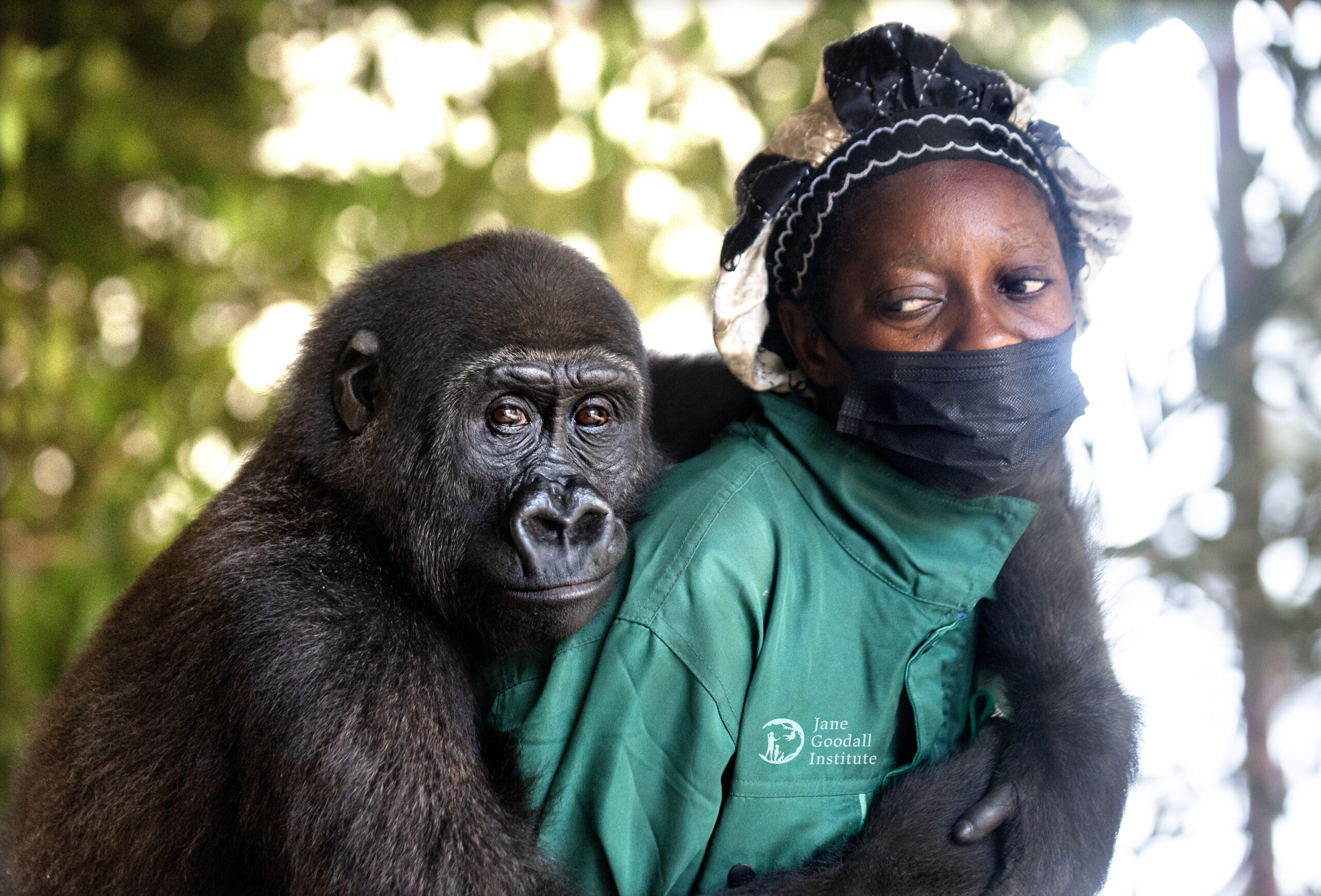
There is a new face at the Jane Goodall Institute’s Tchimpounga sanctuary in the Republic of the Congo,…
