
February 17, 2020 By Ashley Sullivan
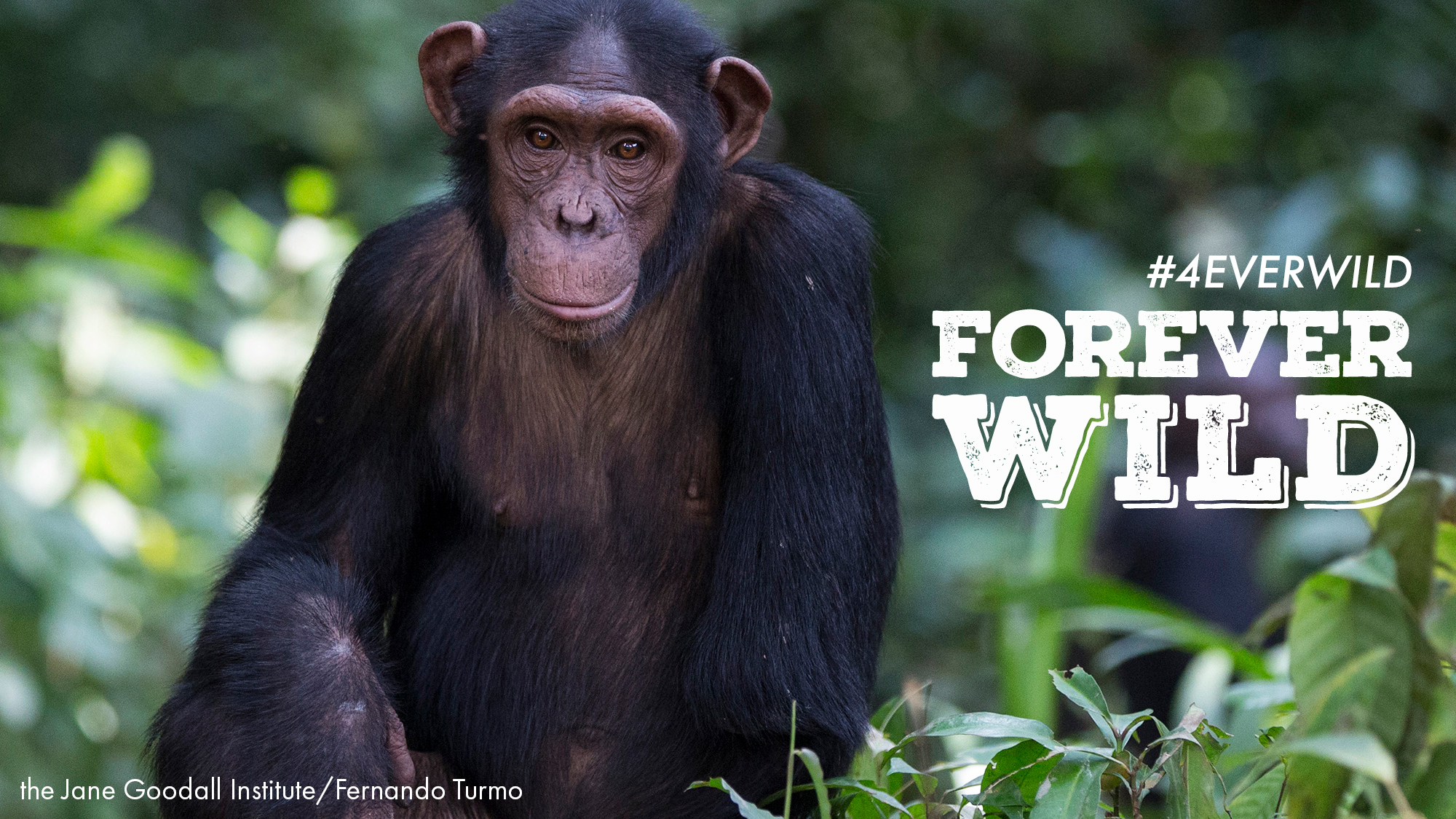
Last year, Dr. Jane Goodall and the Jane Goodall Institute weighed in on a popular social media post which was making the rounds: a young chimpanzee scrolling on a cellphone. Though some thought the intent was good – demonstrating that chimpanzees are highly intelligent – the result and the backstory of this individual chimpanzee were far more tragic and showcased a growing problem of inappropriate great ape representation on social media.
“I am very disappointed to see the inappropriate portrayal of a juvenile chimpanzee in this video which is currently circulating on social media. Chimpanzees are highly social animals, very intelligent and have complex emotions like humans – it is imperative that we portray them appropriately and that they receive the best possible care in captive environments. Portraying chimpanzees in this way on social media is also perpetuating the illegal pet trade in great apes, and as they cannot be domesticated, interactions with humans as displayed by this video are highly dangerous, as well as harmful to the well-being of the chimpanzee. As responsible and compassionate individuals, I hope anyone who sees the video will not like, share or comment on it and all responsible media outlets change the coverage of the video to highlight stories of chimpanzees in wild or responsible captive care. And I hope and urge the people who have chimpanzees in their care will cease use of him in this way and join those of us who are working to end the cruel treatment of chimpanzees in entertainment. “
– Dr. Jane Goodall, DBE, UN Messenger of Peace and Founder of the Jane Goodall Institute
There are several reasons why the video and others like it are highly problematic. This year, Jane had this to say about the issue:
“Used wisely social media can be a force for good. In many ways it can connect us with the natural world and bring greater understanding of chimpanzees and the other amazing animals who inhabit this planet. And it can also inform us about the urgent need to protect them and their habitats. On the other hand, some of the material shared on social media – ‘cute’ infant chimpanzees dressed in human clothes; selfies with various wild animals, and other animals forced to perform for ‘entertainment’. All animals should be treated with respect and there should be nothing in social media to encourage people to buy wild animals as pets or to think that animals used in entertainment are ‘happy’. Please help us share the message that many animals, including chimpanzees and other apes, are endangered in the wild and we should share nothing online that might give a boost to the illegal wildlife trade.”
– Dr. Jane Goodall
First, they promote inappropriate handling by humans. Second, they contribute to larger threats to great apes (both captive and in the wild). With some digging and collaborative research, JGI global chapters have turned our attention to growing awareness around the harm of this kind of content. Through our ForeverWild global campaign, we hope to help animal lovers understand how they can promote GOOD content that helps great apes, and help dismantle social media content systems that HARM great apes. Here’s some background:
1) The video from last year is likely a chimpanzee from Myrtle Beach Safari which has used chimpanzees inappropriately in the past. Other videos featuring a chimpanzee named Limbani, show how chimpanzees are continuously inappropriately handled and showcased on social media through establishments like “Zoological Wildlife Foundation.” This includes questionable displays of their animals across social media and allowing influencers to take Limbani to their homes, or for the public to play with Limbani for money.
Why is this a problem?
These platforms have very large audiences, and what we represent and share can have wide spread and terrible consequences. We have the choice to be responsible in the way we portray non-human animals (captive and in the wild) and how we promote good content, or remove and/or not promote problematic content. If you care about chimpanzees, as many people interacting with this content likely do, you can do something about it. Each of us has the ability to use the power of liking and sharing #APEpropriate content to show others how wonderful and deserving of respect great apes are.
Want to support the care of rescued chimpanzees at Tchimpounga? Learn how here.
The Jane Goodall Institute is a global community conservation organization that advances the vision and work of Dr. Jane Goodall. By protecting chimpanzees and inspiring people to conserve the natural world we all share, we improve the lives of people, animals and the environment. Everything is connected—everyone can make a difference.





The Jane Goodall Institute is deeply saddened by the passing of our longtime friend, supporter, and leader, Donald…

How do you create conservation campaigns that have lasting impacts? You can explain why protecting the environment is…

On June 8, 2026, the National Environment Management Authority (NEMA) in collaboration with the Jane Goodall Institute, Bunyoro Kitara…